Branding is paramount for manufacturers. This process is critical for promoting your products or services and establishing a formidable brand. However, navigating this journey can be challenging without following the correct strategic steps.
By adopting a step-by-step approach and robust strategies, you can realize your branding objectives. Defining your target audience, delivering unique value propositions, and maintaining a cohesive identity are the cornerstones of success.
As manufacturers, there are specific methodologies to overcome the hurdles of the branding process. By adhering to these steps, you can cultivate a high-impact brand.
What is Branding?
Understanding the intricacies of the branding process is vital for any enterprise. It serves as the foundational step in developing a successful marketing strategy. Branding is the art of crafting a distinct identity for a business or product and communicating it effectively to the target demographic.
Defining Branding
Branding encompasses the entire spectrum of actions taken to build a brand. This includes architectural steps such as identity formation, audience identification, and the development of resonant messaging. Effective branding solidifies a business’s market positioning and secures a competitive moat.
| Branding Process Phases |
Description |
| Brand Identity Formation |
Defining the core values, mission, and vision of your enterprise. |
| Target Audience Identification |
Profiling potential customers who will utilize your products or services. |
| Strategic Messaging |
Developing impactful narratives tailored to your target demographic. |
The Strategic Imperative of Branding
Branding is an indispensable driver of corporate success. A sophisticated branding strategy amplifies market visibility, fosters deep-seated customer loyalty, and generates a sustainable competitive advantage.
A potent brand identity facilitates an emotional resonance with your audience by articulating your mission and values with absolute clarity.

The branding journey is a critical factor that shapes the long-term trajectory of your business. Consequently, prioritizing and meticulously managing this process is a prerequisite for future-proofing your enterprise.
Core Elements of Branding
For a successful branding strategy, a well-defined identity and precise audience targeting are non-negotiable. These elements fortify your market presence and communication efficacy.
Brand Identity
Brand identity comprises the elements that reflect your brand’s personality and values. It dictates how you intend to be perceived in the marketplace.

Constructing a brand identity involves visual components like logos and color palettes, as well as the strategic tone and language used to convey your message.
| Element |
Description |
Example |
| Logo Design |
The visual emblem representing your brand. |
The Nike Swoosh |
| Color Palette |
Colors that constitute the visual signature. |
Coca-Cola’s iconic Red and White |
| Tone and Voice |
The linguistic style used in communications. |
Apple’s minimalist and sophisticated tone |
Target Audience Segmentation
Identifying your target audience is crucial for ensuring your message resonates with the right stakeholders. This involves a granular analysis of demographic profiles and consumer behaviors.
- Demographics: Age, gender, socio-economic status.
- Interests: Hobbies, lifestyle preferences, and trend alignment.
- Behaviors: Purchasing patterns and brand affinity.
Deep audience insights empower a brand to craft highly relevant messaging, thereby maximizing the efficiency of marketing expenditures.
Strategic Advantages of Branding
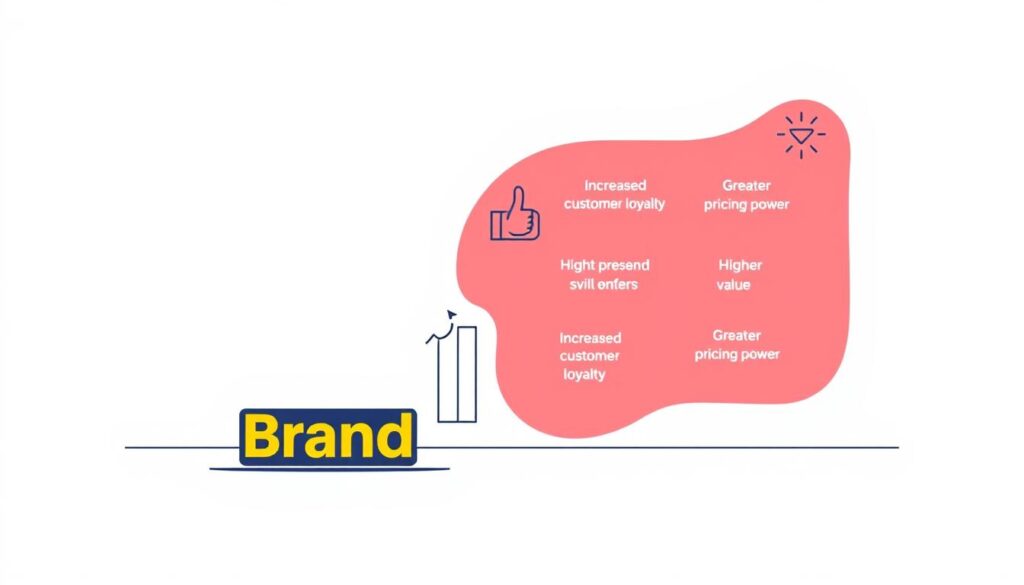
Branding is the primary vehicle for differentiation and securing consumer allegiance in a saturated market. A strong brand establishes a profound emotional connection between your corporate identity and your audience.
Competitive Advantage
One of the most significant dividends of branding is the competitive edge it provides. While the market may be flooded with homogeneous products, a robust brand identity distinguishes your business from the competition.
To achieve this, you must clearly define your unique value propositions (UVP) and mission. This clarity drives market share growth and enhances customer retention.
Consumer Loyalty
Consumer loyalty is a critical byproduct of effective branding. Customers exhibit high degrees of commitment to brands they perceive as reliable and quality-driven.
To cultivate this loyalty, it is essential to consistently optimize the customer experience and build enduring relationships. This serves as the bedrock for long-term commercial viability.
To fully capitalize on these advantages, a business must maintain absolute consistency across all touchpoints, both digital and physical.
Developing a Brand Strategy
A brand strategy serves as your roadmap toward achieving corporate objectives. Crafting an effective strategy solidifies your market position and enables you to outperform competitors.
Goal Setting
Goal setting is a foundational pillar of brand strategy. Clearly articulating what your brand aims to achieve provides the framework for all subsequent tactical maneuvers.
When defining objectives, utilize the SMART criteria to ensure they are specific, measurable, achievable, relevant, and time-bound.
| SMART Criteria |
Description |
Example |
| Specific |
The goal is clear and unambiguous. |
To increase market penetration. |
| Measurable |
Success can be quantified. |
To increase market share by 10%. |
| Achievable |
The goal is realistic and attainable. |
10% growth based on current resources. |
| Relevant |
Aligned with the broader mission. |
Market growth facilitates scaling. |
| Time-bound |
The goal has a defined deadline. |
Achieving a 10% increase within 6 months. |
Differentiation Methodologies
Differentiation allows your brand to break through market noise. This can be achieved through unique product features, superior customer service, compelling brand narratives, or high-performance marketing strategies.
- Unique Product Features: Developing attributes that distinguish your products from rivals.
- Exemplary Customer Service: Providing an unparalleled service experience.
- Powerful Storytelling: Crafting narratives that articulate your values and mission.
- Precision Marketing: Utilizing the most effective channels to reach your audience.
Brand Communication
Brand communication facilitates the interaction between your identity and your target audience, ensuring your mission and values are conveyed with precision.
Conveying the Right Message
Delivering the “right” message is the most critical component of effective communication. Your narrative must reflect your brand’s values and unique characteristics, explaining to consumers why your brand is the superior choice.
Messaging should be clear, consistent, and meticulously aligned with the needs of the audience to strengthen identity and build rapport.
Communication Channels
Channels are the conduits through which your message reaches the audience. These are classified into traditional and digital media.
Selecting the appropriate channel is vital for resonance. Social media and influencer marketing are highly effective for younger demographics, whereas traditional media may be utilized for broader, mass-market reach.
- Social Media Platforms
- Email Marketing
- Traditional Media (Print, Broadcast)
- Influencer Marketing
- Corporate Websites and Blogs
Each channel offers distinct advantages; therefore, your communication strategy should be tailored to the preferences of your target demographic.
Establishing an Online Presence
Cultivating a digital presence ensures your brand exists within the modern consumer’s ecosystem, enabling interaction and competitive positioning.
Websites and SEO Strategy
A corporate website is the digital anchor of your brand. A user-centric, high-speed, and mobile-optimized site reflects professional excellence. To achieve visibility, implementing SEO (Search Engine Optimization) is mandatory.
SEO enhances how search engines interpret your site. Key elements include keyword research, meta-tag optimization, and content refinement.
| SEO Techniques |
Description |
Strategic Benefit |
| Keyword Research |
Identifying audience search terms. |
Relevant content production. |
| Meta-Tags |
Optimizing page titles and descriptions. |
Higher search engine rankings. |
| Content Optimization |
Enriching content with keywords. |
Value for both users and algorithms. |
Social Media Strategies
Social media platforms are where your brand interacts directly with its community. Sophisticated social strategies amplify awareness and build a loyal follower base.
- Define your demographic focus.
- Share high-value, relevant content.
- Incentivize community engagement.
- Analyze performance data to iterate strategies.
Brand Design
A pivotal step in identity formation is the execution of a professional brand design, which shapes visual identity and determines the critical “first impression.”
Logo Architecture
Logo design is the cornerstone of visual identity. A superior logo must encapsulate your company’s values and mission with brevity and impact. The process should prioritize simplicity, originality, and conceptual integrity.
- Simplicity: Ensuring instant recognition and recall.
- Originality: Distinguishing the design from competitors.
- Integrity: Aligning with the core corporate mission.
Typography and Color Theory
Colors and fonts are potent visual cues that reinforce brand identity. Color selection reflects personality, while typography dictates the tone of communication.
Choices should be informed by color psychology; for instance, Blue conveys reliability and stability, whereas Red symbolizes energy and excitement.
| Color |
Psychological Association |
| Blue |
Trustworthiness, Professionalism |
| Red |
Energy, Passion, Urgency |
Typography is equally vital; minimalist sans-serif fonts provide a contemporary aesthetic, while serif fonts evoke tradition and authority.
Crafting a Brand Narrative
A brand story is instrumental in conveying mission and values. A compelling narrative builds an emotional bond with consumers, which in turn drives long-term loyalty.
Brand Values
Values define the character of a brand and inform all strategic decisions. It is essential to select values that align with the ethical and social standards of your target audience.
- Sincerity and Authenticity
- Reliability and Integrity
- Innovation and Vision
Building Emotional Resonance
Emotional connections are the key to enduring relationships. When your brand narrative appeals to emotional values, it fosters a deeper, more resilient bond with the audience.
Brand Management
Brand management involves strategic interventions designed to amplify brand equity. This encompasses a variety of activities aimed at ensuring the brand achieves its high-level objectives.
Continuous Optimization
Iterative improvement is a central tenet of brand management. Brands must evolve in lockstep with shifting market dynamics and consumer expectations to maintain relevance.
- Monitoring market trends.
- Analyzing consumer feedback loops.
- Delivering innovative products and services.
Crisis Management
Effective crisis management is critical for reputational protection. Brands must be prepared to respond decisively and transparently to unforeseen challenges.
- Anticipating potential crisis scenarios.
- Establishing swift and transparent communication protocols.
- Restoring consumer trust through accountability.
Measurement and Evaluation
Quantifying brand performance is essential for informing future strategies. It enables you to identify internal strengths and market vulnerabilities.
Key Performance Indicators (KPIs)
Various metrics are utilized to evaluate brand health, including awareness levels, loyalty scores, market share, and sales velocity.
- Brand Awareness: Measuring the extent of recognition within the target market.
- Customer Loyalty: Assessing the degree of brand commitment.
- Market Share: Analyzing the brand’s relative position in the industry.
Consumer Feedback Mechanisms
Feedback is a strategic asset. Methods such as social listening, satisfaction surveys, and direct polls provide the qualitative data necessary for brand refinement.
Common Branding Pitfalls
Errors in the branding process can severely impede success. Strategic foresight is required to avoid these common traps.
- Inconsistent brand communication.
- Inaccurate target audience definition.
- Neglecting rigorous competitor analysis.
Best Practices: What to Avoid
To maximize brand success, consider these preventative measures:
- Do not confuse the consumer by constantly altering your identity.
- Maintain an active presence and interact authentically on social media.
- Never overlook market trends or rival strategic maneuvers.
Branding Across Diverse Sectors
Branding methodologies vary by sector, dictated by unique industry dynamics and consumer behaviors.
Food and Beverage Sector
In this sector, quality and sensory appeal are paramount. Consumers gravitate toward trusted, high-quality products.
| Branding Factor |
Strategic Importance |
| Product Quality |
Drives consumer trust and safety. |
| Flavor Profile |
Determines repeat purchase intent. |
| Packaging Design |
A critical factor in shelf-appeal and first-contact. |
Technology Sector
Branding in technology focuses on innovation and the user experience (UX). Consumers prefer forward-thinking, intuitive solutions.
| Branding Strategy |
Technological Application |
| Innovation |
Developing cutting-edge product ecosystems. |
| User Experience (UX) |
Designing accessible and seamless interfaces. |
| Technical Support |
Providing rapid and effective post-purchase assistance. |
Branding and Innovation
Innovation is the engine of modern branding. It plays a decisive role in securing a competitive advantage and ensuring the long-term viability of a brand.
Innovation necessitates the continuous refinement of products and services, ensuring your brand remains at the forefront of the market.
Innovative Product Development
Pioneering products set your brand apart by providing novel solutions to consumer pain points.
- Integrating consumer feedback into the R&D process.
- Synthesizing market trends with product vision.
- Embedding emerging technologies into your offerings.
The Brand-Technology Synergy
Technology is a formidable tool in the branding arsenal. Digital platforms amplify visibility, while technological integration fosters a perception of a modern, forward-thinking brand.
Future Branding Trends
Digitalization and sustainability are the twin pillars of future branding. These factors are revolutionizing how brands are perceived and how they interact with the global consumer base.
The Impact of Digitalization
Digitalization has fundamentally disrupted branding strategies. Brands must now maintain a sophisticated digital presence to leverage new opportunities.
- High-efficiency use of digital marketing channels.
- Establishing an authoritative social media presence.
- Leveraging data analytics for predictive consumer insights.
| Digital Channel |
Description |
Strategic Use-Case |
| Social Media |
Driving community engagement. |
Platforms like Instagram and LinkedIn. |
| Email Marketing |
Direct-to-consumer communication. |
Personalized CRM flows. |
| Search (SEO) |
Maximizing organic visibility. |
Securing top-tier Google rankings. |
Sustainable Branding
Sustainability is no longer optional; it is a core consumer expectation. Brands that champion environmental and social responsibility generate higher perceived value.
Sustainable branding is a prerequisite for long-term success as modern consumers increasingly favor ethically conscious brands.
| Sustainability Pillar |
Description |
Examples |
| Environmental Stewardship |
Preservation of natural resources. |
Energy efficiency and waste reduction. |
| Social Responsibility |
Generating societal benefit. |
Education and healthcare initiatives. |
| Ethical Supply Chains |
Transparent and fair sourcing. |
Fair Trade and ethical labor practices. |
Conclusion and Strategic Recommendations
Selecting the right strategy is the most critical decision in your branding journey. Success requires the careful architectural construction of identity, precise audience targeting, and the utilization of high-leverage communication channels.
Critical Success Factors
Adaptability and continuous evolution are mandatory. By integrating consumer feedback and innovative solutions, you ensure your brand remains resilient against market fluctuations.
Long-Term Success Strategies
Conduct regular audits of your branding strategies to ensure alignment with emerging trends. The integration of digitalization and sustainability principles will be the ultimate differentiator in the brand landscapes of tomorrow.
Frequently Asked Questions
How long does the branding process typically take?
The duration varies based on sector complexity and corporate scale, typically spanning from several months to a few years for full maturity.
What are the primary stages of establishing a manufacturing brand?
The journey involves identity formation, audience profiling, strategic planning, brand communication, and the establishment of a robust online presence.
Why is branding considered a strategic necessity?
Branding ensures market recognition, establishes institutional trust, secures competitive advantages, and drives customer loyalty.
How is effective brand design executed?
Design involves synthesizing a logo and visual identity that aligns with both the corporate mission and the expectations of the target audience.
What is the importance of a digital presence in branding?
An online presence ensures global accessibility and facilitates real-time interaction through websites, SEO, and social media channels.
What are the most frequent pitfalls in the branding process?
Common errors include message inconsistency, inaccurate audience targeting, and failing to account for competitor dynamics.
How do you quantify and evaluate brand success?
Success is measured through performance indicators (KPIs) such as awareness levels, loyalty metrics, and structured consumer feedback loops.
How do branding and innovation intersect?
They are symbiotic; innovation provides the substance for brand differentiation, while branding provides the platform for innovative products to succeed.